|
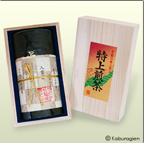 
120g 5,000yen
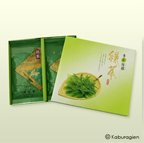
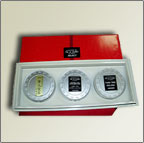
(Asahi with the wooden box)

|
 |
This is the winner in the 62th Hand-rubbed Sencha Competition in Kansai where held in head tea market of Kyoto prefecture tea cooperative association in 8th September 2009. There are 257 Sencha exhibits in this year. Our company's president and executive participated and successfully bid the 1st prize Sencha. This sencha is made by Mr. Thunemasa Okubo in Nara city.
Participation in the competition starts from fertilizing the soil, paying special care for their honor. First, the farmers enrich the soil with organic fertilizer. After two years, when the soil has become rich enough, they plant cuttings. They rear the plants for about three years. When young leaves sprout, they pick the leaves. Freshness is one of the most important factors for the taste of green tea. Dozens of veteran farmers pick the leaves in the shortest time and the leaves are steamed as soon as possible. The experts rub the steamed leaves to dry. Only by repeating these processes, do these long and thin tea leaves shine black like needles. Teas are examined from four points of view: aroma, shape, taste, and color of water. This product scored the high marks in all four categories (189points). Brew it at lower temperatures(70�‹C). It gives water a golden yellow color, which is peculiar to hand-rubbed tealeaves, a thick, sweet aftertaste, and the delightful aroma of a true tea. Just one sip gives a sense of satisfaction. This is a blissful tea
How to make tea
| Amount of tea leaf |
5-7g |
| Temperature of hot water |
70 degrees |
| How many minutes put water in a Kyusu ? |
1.5min |
| How many times you get brewing ? |
1taimes |
|
 |
 |
| |
|
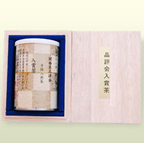
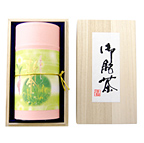
88g 3,000yen
(Pull top can in wooden box)
|
|
This is the winner in the 62th Hand-rubbed Sencha Competition in Kansai where held in head tea market of Kyoto prefecture tea cooperative association in 8th September 2009. There are 257 Sencha exhibits in this year. Our company's president and executive participated and successfully bid the 1st prize Sencha. This sencha is made by Mr. Thunemasa Okubo in Nara city.
Participation in the competition starts from fertilizing the soil, paying special care for their honor. First, the farmers enrich the soil with organic fertilizer. After two years, when the soil has become rich enough, they plant cuttings. They rear the plants for about three years. When young leaves sprout, they pick the leaves. Freshness is one of the most important factors for the taste of green tea. Dozens of veteran farmers pick the leaves in the shortest time and the leaves are steamed as soon as possible. The experts rub the steamed leaves to dry. Only by repeating these processes, do these long and thin tea leaves shine black like needles. Teas are examined from four points of view: aroma, shape, taste, and color of water. This product scored the high marks in all four categories (189points). Brew it at lower temperatures(70�‹C). It gives water a golden yellow color, which is peculiar to hand-rubbed tealeaves, a thick, sweet aftertaste, and the delightful aroma of a true tea. Just one sip gives a sense of satisfaction. This is a blissful tea
|
|
|
| |
|